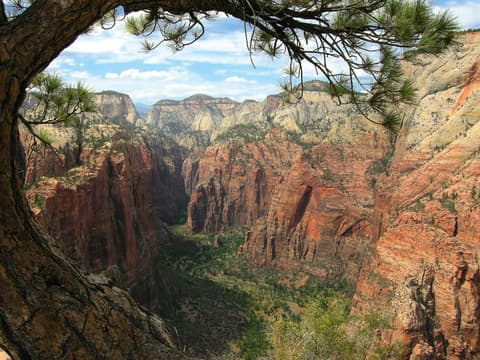
You booked March because it looked like the smart move. Warmer than January, cheaper than June, and every blog you skimmed called it "shoulder season" like that settles the matter. Then you started digging into logistics. The shuttle schedule flips sometime in early March. The Narrows might be closed from snowmelt you can't predict from your couch in December. The weather forecast two weeks out is basically a coin with extra steps. March isn't really a shoulder season. It's a park mid-transformation, and where your trip lands inside that month matters more than almost any other timing decision you'll make.
Here's the part that actually changes everything. For most of winter, you can drive your own car up Zion Canyon Scenic Drive. Once the shuttle restarts, that stops. This year, shuttle service in Zion Canyon and Springdale begins Saturday, March 7. After that date, private vehicles are locked out of the scenic drive, with only narrow accessibility exceptions. Trip before March 7, and you're driving yourself to trailheads on your own schedule. Trip after, and you're back to shuttle stops, wait times, and the 6 a.m. parking scramble in Springdale. Same park, two different logistics plans, split by one Saturday.
The Weather Has Not Read the Calendar
March in Zion can swing from 65-degree canyon sun to a surprise dusting of snow in the same week. The valley floor sits around 4,000 feet, which keeps it milder than the surrounding highlands. Cold fronts still roll through, and they don't check the calendar first. Pack layers you'd actually wear in both spring and winter. Mornings can start in the 30s. Afternoons can hit the 60s. The average high looks pleasant on paper, but a real jacket earns its space in the bag more days than not.
The bigger wildcard is water. Snowmelt from the highlands north of the park feeds the Virgin River, and when runoff picks up, the Narrows closes. The bottom-up day hike shuts down once flow crosses roughly 150 cubic feet per second for more than a day. The top-down route closes even earlier, around 120 cfs. There's no fixed date for this. It depends on how much snow fell up north and how fast it's melting that particular week. The honest answer to "will the Narrows be open in March" is check three days before you leave, not three months before. Build a backup hike into the plan instead of anchoring the whole trip to one trail you can't control.
Crowds Are Building, But This Isn't Peak Season Yet
March draws spring breakers, photographers chasing wildflower season, and everyone who spent winter waiting for warmer trail conditions. It's busier than January by a wide margin. It is not July. Parking at the Zion Canyon Visitor Center still fills early on weekends, especially once the shuttle restarts and traffic funnels through one entry point. But this isn't the kind of midday gridlock that defines peak summer. Arrive before 8 a.m. on a weekend and you'll still find a spot without circling for forty minutes.
Photographers show up in March for a reason. Late winter light hits the canyon walls at a lower angle than summer. The sandstone glows longer in the morning and evening instead of flattening out under a noon sun. Early wildflowers start along the lower elevations by late March in a mild year, though a cold snap can push that back by weeks. If flowers are the goal, treat the date as a guess, not a plan. Check recent trip reports before you build a whole day around it.
Entrance fees don't change with the season. It's $35 per private vehicle for a 7-day pass, $20 per person on foot or by bike, and free for anyone 15 and under. Making more than one Utah park trip this year? The Zion-only annual pass runs $70 and pays for itself after two visits. That part stays fixed while everything else in March moves around you.
Lodging in Springdale also starts waking up. Rates are still below peak summer pricing, but the deep winter discounts from January and February start disappearing fast once spring break bookings roll in. If your dates land anywhere near a school break, book that room earlier than feels necessary. The cheapest rooms go first, and they go quickly once people realize March is back on the table. Restaurants and gear shops that trimmed their hours in January start extending them again too. A town that felt half-asleep in February starts feeling like itself.
Early March and Late March Are Basically Different Trips
Treat the month as two halves, not one block. The first half, before the shuttle restarts, is quieter and colder, but you get your own car on the scenic drive. Fewer people. More control. A real shot at having a pullout to yourself at sunrise. The second half trades that flexibility for warmer afternoons, a running shuttle, and the first real crowds of the year on weekends. Neither half is objectively better. They're two different trips wearing the same month's name, and knowing which one you booked changes how you plan the rest.
A Framework That Actually Accounts for the Variability
Instead of locking a fixed itinerary and hoping March cooperates, plan in tiers. Tier one is your weather-proof anchor. Something like the Pa'rus Trail or Canyon Overlook, both fine at 40 degrees and drizzling or 65 and clear. Tier two is your conditions-dependent pick, the Narrows or a longer canyon hike. Confirm that one the morning of, after checking the park's current conditions page for river flow. Tier three is your fallback, a lower-elevation walk like the Riverside Walk, or a scenic drive day if everything else gets rained or iced out.
Having all three mapped before you land means a bad-weather morning doesn't torch the trip. It just moves you down a tier you already planned for. Wake up to fog and an icy trailhead, and you're not standing in a parking lot arguing about what to do. You already know: check whether tier one is walkable, skip tier two without debate, head for tier three. The decision gets made before the weather gets a vote.
Pack a printed or downloaded copy of the current conditions page too, in case cell service drops in the canyon, which it does often. Having the numbers on hand beats guessing from memory when you're standing at a trailhead deciding whether to commit.
The shuttle date factors into this too. Trip starting before March 7? Front-load your scenic drive hikes early, since you've got your own car and no shuttle line. Arriving after? Plan your first morning around shuttle timing instead of trail timing. Early-season buses typically start running before sunrise, and catching one of the first few beats both the crowds and the worst of the wait.
March rewards people who plan for a month that hasn't decided what it wants to be yet. Bring layers for both seasons. Hold your river hikes loosely. Let the shuttle calendar tell you how your mornings are going to work. Get that part right, and the unpredictability stops being a problem. It becomes the reason March visitors see the park quieter, colder, and greener than the crowds waiting for June. Browse our Seasonal Guides for how the rest of the year compares. Check Getting Around for the full shuttle and parking breakdown before you land.