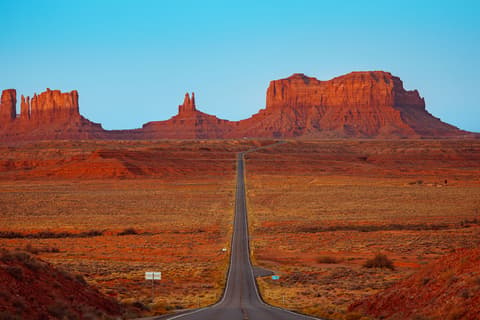
You have two weeks, or ten days, or maybe just five. You have written the names down somewhere: Zion, Bryce Canyon, Capitol Reef, maybe the North Rim. You have opened Google Maps and noticed that the parks are close enough to feel doable but spread out enough to feel uncertain. What you need is a sense of how the region actually connects, how long the drives really take, and where the decision points are between an ambitious loop and a trip you will actually enjoy.
Southern Utah rewards people who understand the geography before they book the first hotel. The parks are not a straight line and they are not interchangeable. Each one sits at a different elevation, reads differently on the road, and demands a different kind of day. Zion is the western anchor, reachable from Las Vegas in under three hours and usually the first stop for visitors coming from the south or west. From Springdale, everything else fans outward from there.
The Drives, Honestly
Zion to Bryce Canyon is the most-traveled leg of any Southern Utah road trip, and it is shorter than most people expect. The drive from Springdale to the Bryce Canyon entrance runs about 84 miles via US-89 North, typically 1 hour and 50 minutes without stops. The route climbs steadily from Zion's canyon floor at roughly 4,000 feet to Bryce's rim at 8,000 feet. This means the temperature drops noticeably and snow is possible at Bryce even when Zion feels perfectly mild. If you are visiting in spring or fall, check the weather at both parks before you go. The elevation gap between them is not decorative.
From Bryce, the next logical leg is Scenic Byway 12 to Capitol Reef. This is where the road trip shifts from efficient to genuinely remarkable. Highway 12 is 122 miles of federally designated All-American Road that connects the Bryce area to the town of Torrey, just outside Capitol Reef's western edge. The straight-through drive takes about 2.5 to 3 hours, but that framing undersells it. The road crosses the spine of the Hogback Ridge, where the pavement narrows and drops away on both sides into canyon country. Nothing sits between you and a few thousand feet of air but a guardrail and good tire tread. It dips through the town of Escalante, passes the outer reaches of Grand Staircase-Escalante National Monument, and climbs again through aspen and pine before delivering you to the red domes of Capitol Reef. Budget a full day for this leg if you can. It is not a connector road. It is one of the best drives in the American West.
Grand Staircase-Escalante is not a park in the way most visitors expect. It is nearly 1.9 million acres of BLM-managed monument, and most of its interior is accessible only by high-clearance vehicle or 4WD. Highway 12 runs along its northern edge and US-89 traces its southern boundary. Those paved corridors are where most road-trippers engage with it. If you want to go deeper, Hole-in-the-Rock Road and Cottonwood Canyon Road are the main options, but check road conditions before you commit. Rain can make the clay surfaces impassable in any vehicle. For a road trip without a capable off-road vehicle, Grand Staircase is best experienced from the highway rather than treated as a destination with a trailhead parking lot.
The Grand Canyon North Rim completes the natural loop from a geographic standpoint. It sits about 156 miles from Bryce Canyon and 95 miles from Zion's East Entrance. In good conditions, the drive from Bryce to the North Rim takes about 2 hours and 55 minutes. One critical note for anyone planning this trip right now: the North Rim closed on November 14, 2025, earlier than its usual seasonal closure date, due to safety concerns related to the Dragon Bravo Fire and incoming winter weather. The tentative reopening date is May 15, 2026. If the North Rim is part of your plan, verify current access at nps.gov/grca before you book anything.
Who Should Do the Full Loop vs. Who Should Keep It Simple
The full Southern Utah loop, Zion to Bryce to Capitol Reef to the North Rim and back, covers somewhere between 600 and 700 miles of driving depending on your routing, not counting day trips or side roads. It is genuinely doable in 10 days. It is enjoyable in 14. At 7 days, you are moving too fast to absorb any of it properly.
The people who do well on the full loop tend to share a few traits. They are comfortable with driving days that run 3 to 4 hours. They are willing to accept one strong morning at a park rather than insisting on seeing everything. They have a plan for where they are sleeping each night before they start the car. They have made peace with the idea that the driving itself is part of the trip, not a tax you pay to get between the good parts.
If that does not sound like your group, or if your timeline is under a week, the Zion-Bryce pairing is the most satisfying short version of this trip. Two parks, one short drive, two genuinely different landscapes, and enough hiking to fill four or five days without rushing. Capitol Reef as a third stop requires committing to Scenic Byway 12 as a destination in its own right, which it deserves. Add it when the itinerary has room to breathe.
The Base Camp Question
The base camp approach works better in this region than in most. You stay in one place and make day trips rather than moving hotels every night. Springdale is the obvious anchor for a Zion-focused trip, but it also puts Bryce Canyon within a two-hour drive. Kanab, about 40 miles east of Springdale on US-89, sits at a central point. It gives you reasonable access to Zion, Bryce, the North Rim approach road, and the southern edge of Grand Staircase-Escalante. It is quieter than Springdale and noticeably less expensive, which matters when you are talking about a 10-day trip.
For anyone who wants Capitol Reef in the mix without driving back across the region, Torrey is the base camp. It is a small town with limited but genuinely good lodging options and puts you at the eastern end of Scenic Byway 12 with Capitol Reef literally next door. The tradeoff is that Torrey is remote in the way that Southern Utah is genuinely remote: one main road, limited cell service in many directions, and not much between you and the next town.
The point-to-point approach gives you more flexibility. You drive a loop and change hotels every night or two, letting you spend the right amount of time in each place without backtracking. It works best when you book accommodations well ahead, particularly in peak season when Springdale and Bryce Canyon City fill up fast.
Before You Finalize the Route
The planning details for any individual park in this region are worth a separate read before you commit to a timeline. Entrance fees, permit requirements (Angels Landing at Zion and some Capitol Reef backcountry routes), shuttle access windows, and seasonal road closures can all reshape a day that looked straightforward on paper.
Browse the Beyond Zion section on Zion Travel for individual guides to the parks and destinations in this region. If you are working on a multi-day structure, the Itineraries section has trip frameworks organized by duration and interest. The big-picture loop is worth planning carefully. It is a genuinely great road trip, and the difference between a good version of it and a great one usually comes down to whether the driving days are planned or improvised.
Frequently Asked Questions
How long is the drive from Zion to Bryce Canyon?
The drive from Springdale to Bryce Canyon entrance is about 84 miles via US-89 North, typically 1 hour and 50 minutes without stops. The route climbs from Zion's canyon floor at roughly 4,000 feet to Bryce's rim at 8,000 feet, so temperature and weather conditions change noticeably.
What is Scenic Byway 12 and how long does it take?
Scenic Byway 12 is a 122-mile federally designated All-American Road connecting Bryce to Torrey (near Capitol Reef). The straight-through drive takes about 2.5 to 3 hours, but it's recommended to budget a full day for this leg as it's one of the best drives in the American West, crossing the Hogback Ridge and passing through Escalante and Grand Staircase-Escalante.
How many days do you need for a full Southern Utah loop?
The full loop covering Zion, Bryce, Capitol Reef, and the North Rim spans 600–700 miles and is doable in 10 days, but genuinely enjoyable in 14 days. At 7 days or fewer, you're moving too fast to absorb the landscape properly.
What is the best base camp for a Southern Utah road trip?
Springdale is ideal for Zion-focused trips but also puts Bryce within 2 hours. Kanab (40 miles east) offers central access to Zion, Bryce, the North Rim approach, and Grand Staircase-Escalante at a lower cost. Torrey is best if you want Capitol Reef as your anchor, though it's remote with limited cell service.
What's the current status of the Grand Canyon North Rim?
The North Rim closed on November 14, 2025, due to safety concerns related to the Dragon Bravo Fire and winter weather, with a tentative reopening date of May 15, 2026. Verify current access at nps.gov/grca before booking.
How big is Grand Staircase-Escalante and how do you explore it?
Grand Staircase-Escalante is nearly 1.9 million acres of BLM-managed monument. Most of the interior requires high-clearance vehicle or 4WD. Highway 12 and US-89 run along its edges where most road-trippers engage with it; deeper exploration via Hole-in-the-Rock Road and Cottonwood Canyon Road requires checking road conditions as rain can make clay surfaces impassable.